One scene, every format
A sales launch usually needs renders for the sales office, a video for the landing page and vertical cuts for social media. Often these are three separate orders with three teams and three budgets. We build one 3D scene and produce every format from it. Here is what that changes in practice.
What we mean by one scene
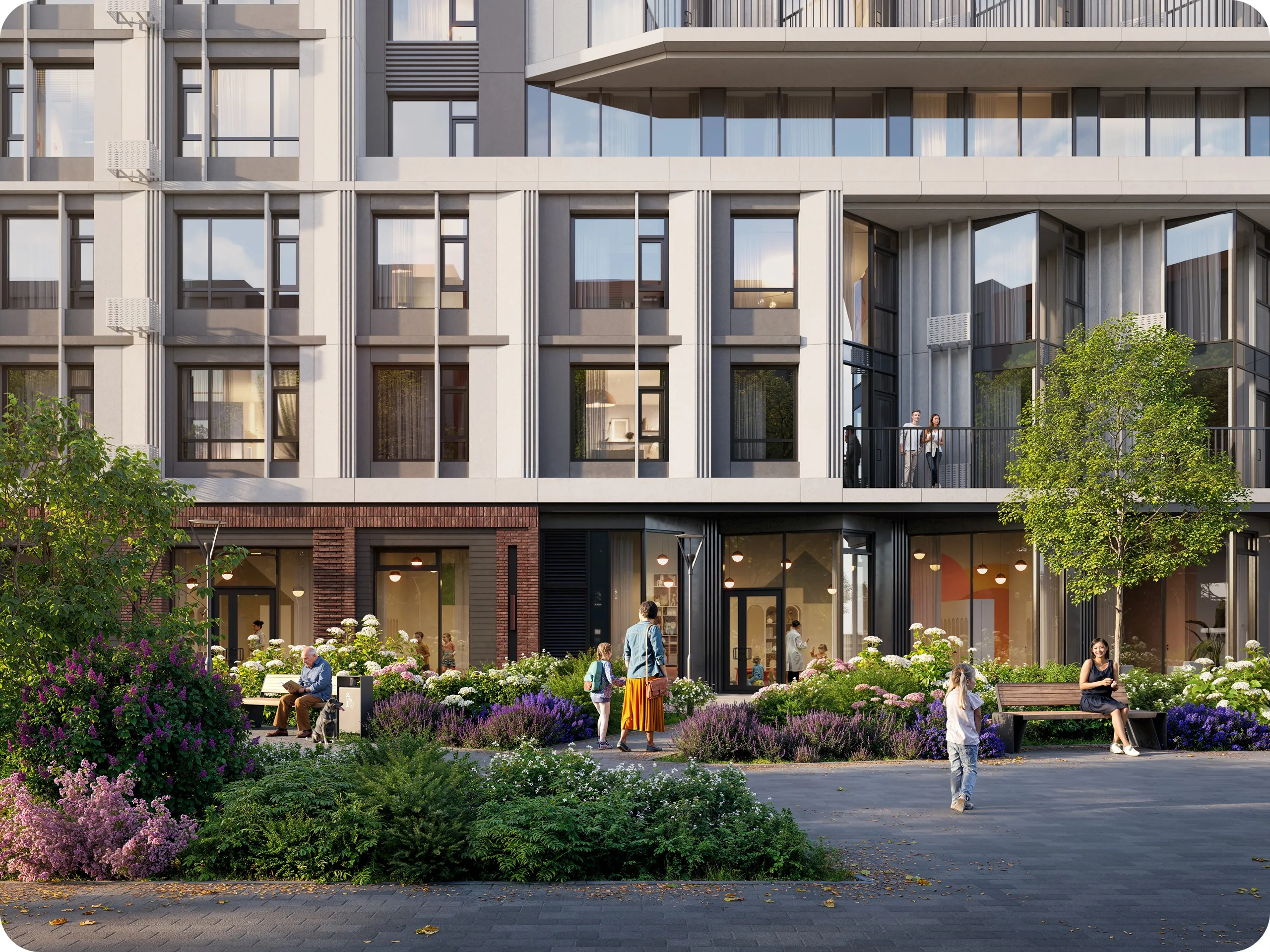
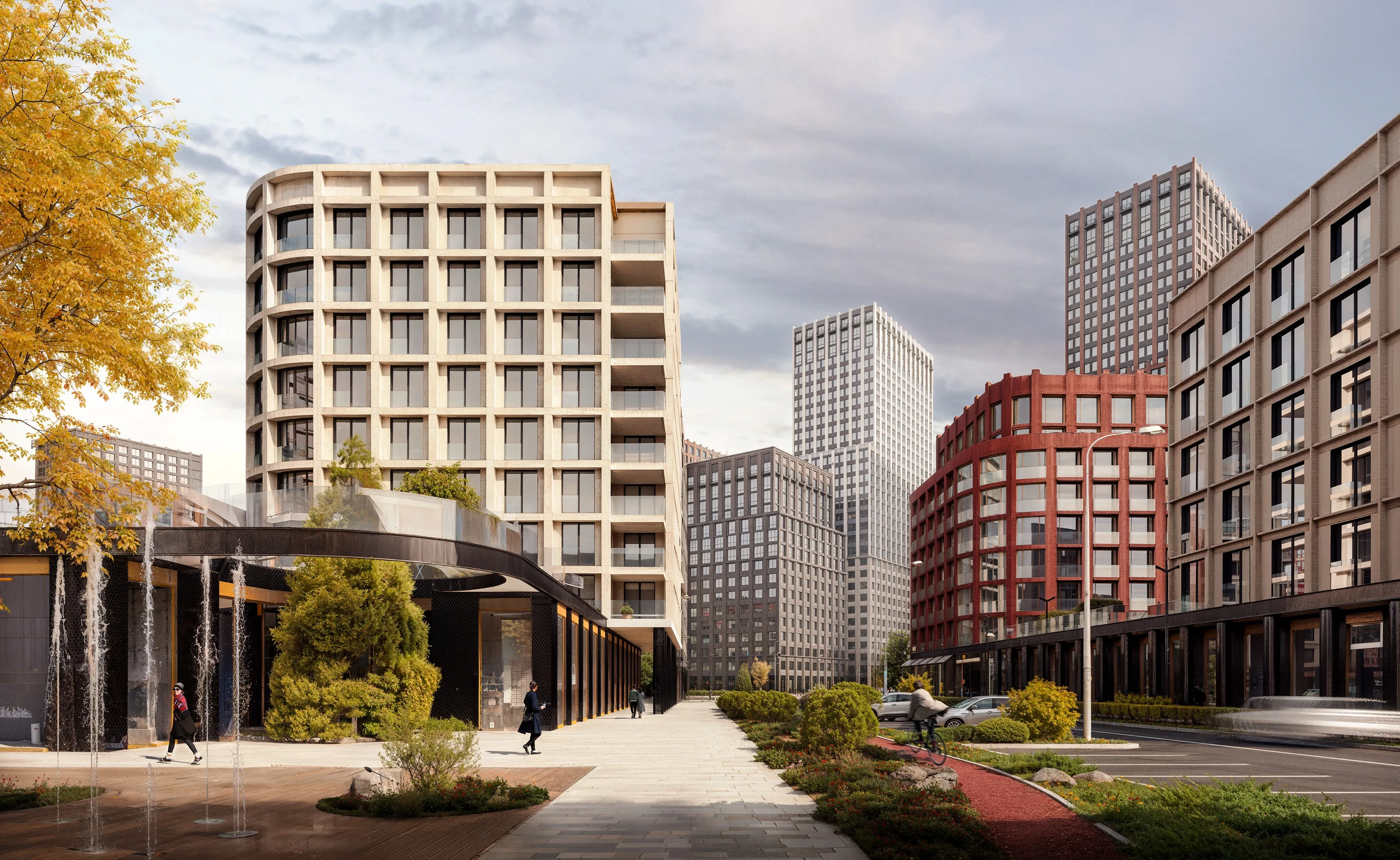
The scene is the whole project in 3D: buildings, landscape, materials, lighting, people, cars, trees. Once it is approved, the scene is fixed. A still is a camera placed in the scene. A video is a camera moving along a path. A social cut is the same path re-framed for a vertical screen. Nothing is modelled again between formats, so the facade in the still and in the video is the same facade, and the tree by the entrance is the same tree.
Interiors work the same way. An apartment built for a still also gives the view from the window for the floor plan, a shot in the video and a 360 panorama for the website.
We also make AI content from the finished renders: lifestyle scenes and ad images for the campaign. We give these as a bonus. The building in them is the same, because the approved images are the starting point.
What it saves
Time. Most of the work in visualization goes into modelling and approvals: the geometry is checked against the drawings, the materials against the specification, the landscaping is agreed with the architect. With one scene this is done once. If you need a video after the stills are approved, what is left is placing cameras and animating. There is no second production with a second round of checks.
Drift. When stills and video are made in different files, they slowly drift apart. A different tree here, a warmer sky there, a facade panel changed in one file and forgotten in the other. The sales team notices first, then the buyers, and the argument about which image is the right one costs more than the render itself. In a single scene there is nothing for that drift to come from.
Budget. The same building is not modelled three times. The scene is built once, and after that the work goes into cameras. Each extra angle of a space that is already built costs less than the first one, because there is less work behind it.
Approvals. Sales, marketing and the architect review the scene once. If a banner for the site fence is needed a month later, it is made from the same approved scene, and no new round of comments has to be opened.
What to put in the brief
The scene has to be built for several formats from the start. That is decided at the brief.
- Tell us every format before we start. A scene built for four exterior stills can be extended to a video later. But if the video is known from day one, the scene is built lighter and cleaner, and it is cheaper to animate.
- Send all the inputs at once: floor plans, sections, elevations in PDF or DWG, the 3D model if there is one, the materials and colour specification, the site plan. Whatever is missing gets modelled from guesses and then rebuilt when the real drawings arrive.
- Choose the season and time of day early. A winter facade in the evening and a summer afternoon are two different scenes. Both are possible, but each one determines the lighting and the landscape.
- Name one person who signs off. Several departments use the scene, and each will have an opinion. On your side the scene needs one owner.
Where the limits are
One scene does not mean every image looks alike. A still can be composed for a billboard, a video can be cut for a short pre-roll, the same scene can be rendered on a rainy morning and on a summer evening. The geometry and the materials stay fixed, because the buyer will later compare them with the finished building.
The number of images has limits too. Every camera is work: framing, people, staging, post-production. A video is a camera path, animation and editing. Extra angles of the same space cost less than the first one, but they are never free, so we agree them before rendering.
And the scene is not frozen forever. If the project changes after approval (new balconies, a different colour scheme, a different entrance), the scene changes with it, and that is billed as a change. The upside is that the change is made in one place only.
Where to start
Before you ask for a quote, list every place the images will be used: the sales office wall, the landing page, the brochure, Instagram, the developer's app, the banner on the site fence. Then ask for one scene that covers all of them. The quote will be longer than a line that says "ten renders", and the launch as a whole will cost less.
Read us in Telegram
Work in progress, backstage and short notes between articles.